


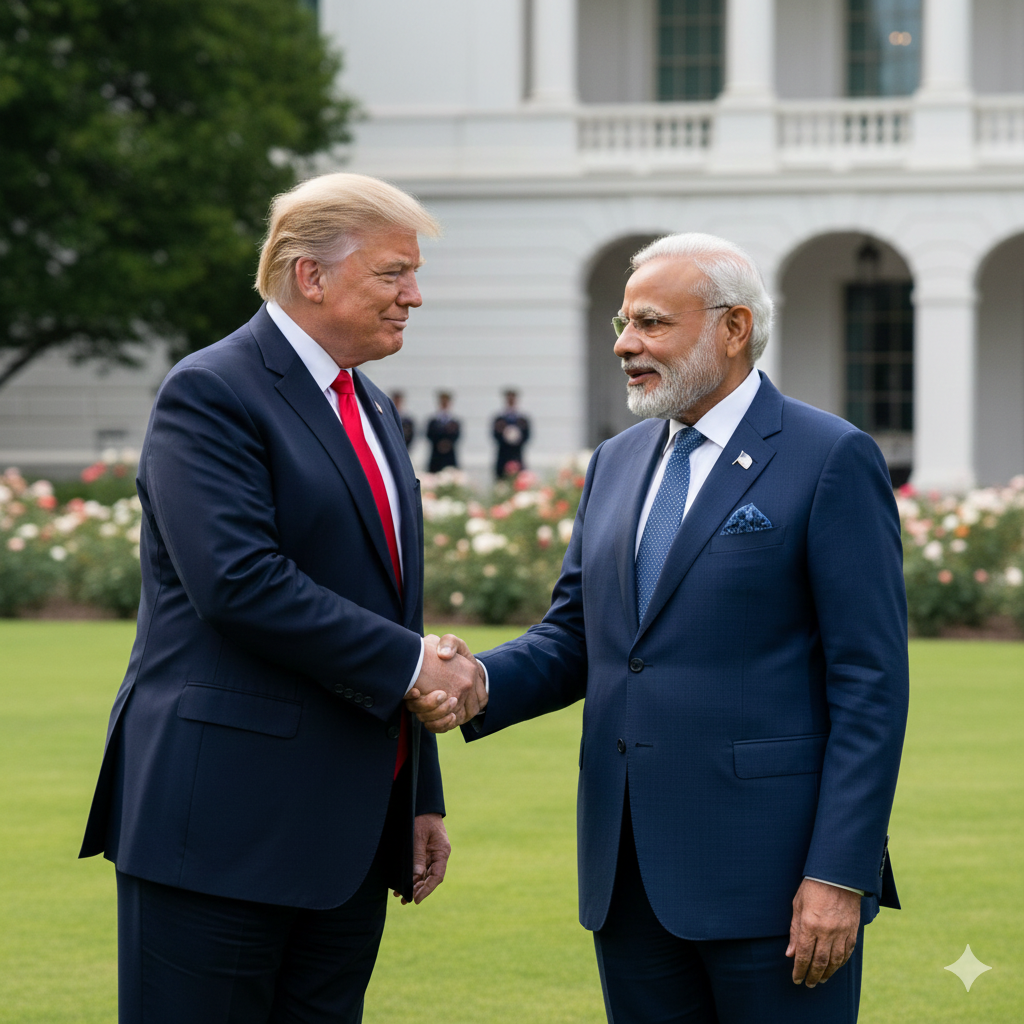
Vancouver: Whenever U.S.–India relations make headlines, there is a temptation to ask whether the partnership is “booming” or “breaking.” The truth, as it stands today, is more complicated—and more interesting. The relationship between Washington and New Delhi is neither fragile nor frictionless. It is mature enough to disagree, strong enough to endure those disagreements, and uncertain enough to make the next few years genuinely consequential.
If measured by official language alone, the relationship appears to be in excellent health. Leaders on both sides speak of shared values, strategic trust, and a common vision for the Indo-Pacific. Military exercises continue to grow in scale and sophistication. Cooperation spans defense, technology, space, climate, and education. Few bilateral relationships today are as wide in scope.
Over the past year, tensions over trade, tariffs, and India’s energy choices—particularly its continued engagement with Russia—have strained the tone of the partnership. Sharp rhetoric from Washington and retaliatory frustration in New Delhi have reminded both sides that strategic alignment does not erase national interest. The relationship has not derailed, but it has lost some of its easy momentum.
This moment matters because U.S.–India ties are no longer driven by novelty or symbolism. The “historic breakthrough” phase is over. What remains is the harder work of managing expectations between two countries that are powerful, proud, and unwilling to subordinate their interests to the other.
At the strategic level, the logic of partnership is undeniable. The United States sees India as central to maintaining balance in Asia—too large to ignore, too independent to control, and too important to fail as a partner. In turn India recognizes that the U.S. remains unmatched in technology, capital, and global influence. Their cooperation is not sentimental; it is practical.
One of the persistent misunderstandings in Washington is the assumption that deeper partnership should naturally lead to closer alignment on every major global issue. India has never accepted that premise. It’s foreign policy has always been shaped by a desire to preserve room for maneuver, avoid entanglement, and make decisions case by case. This is not indecision; it is doctrine.
India’s engagement with Russia, most visibly in energy, has become the point where these differences surface most openly. Washington see it as a contradiction. In New Delhi, it is understood as a necessary choice—rooted in economics, history, and a reluctance to allow outside pressure to define national policy. Neither side is acting irrationally—but they are operating from different assumptions.
Trade has become another fault line. Even as both governments talk about building closer economic ties, old disagreements over tariffs, trade, and regulations are quietly resurfacing. For Indian businesses, these measures feel at odds with the promises of partnership. From the U.S. perspective, economic pressure has simply become a normal part of diplomacy. But if this gap between words and actions isn’t addressed, it could quietly sow long-term mistrust.
Defense cooperation is still going strong. Today, the two militaries work together more closely than ever before. Intelligence sharing, joint exercises, and coordination on equipment happen quietly and steadily—not through flashy announcements, but through consistent, professional collaboration.. These ties are built quietly—and that is often what makes them durable.
Technology collaboration is following a similar path. Cooperation in semiconductors, artificial intelligence, space research, and advanced manufacturing reflects a shared understanding that future power will be defined less by territory and more by innovation. These are long-term bets, insulated from the daily churn of political disputes.
Perhaps the most underappreciated strength of the relationship lies outside government altogether. The Indian diaspora in the United States—students, scientists, entrepreneurs, doctors—forms a human bridge that no policy disagreement can easily sever. These connections shape perceptions, soften rhetoric, and create incentives for stability on both sides. Governments argue; societies adapt.
In Washington, there is a growing impulse to sort partners into neat categories—aligned or unaligned, cooperative or obstructive. India fits none of these boxes comfortably. In New Delhi, there is rising skepticism about being described as a “key partner” while being subjected to public pressure and economic penalties. These perceptions are important because once trust is lost, it’s hard to get back.
The real danger isn’t a sudden breakup. It’s quieter—a slow shrinking of what the relationship can achieve. A relationship that continues to function, but stops dreaming big. That would be a loss—not just for the two countries involved, but for a global order that increasingly depends on flexible, plural partnerships rather than rigid alliances.
For the United States, the challenge is learning to work with an India that insists on being itself—independent, opinionated, and occasionally inconvenient. For India, the challenge is balancing autonomy with responsibility, ensuring that its insistence on strategic freedom does not slide into strategic ambiguity.
The U.S.–India relationship has reached a stage where success will not be measured by joint statements or summit photos, but by how well both sides manage disagreement without letting it define the partnership. If they can manage that, the relationship won’t just survive—it could help shape global affairs for years to come.


